

Badalona, Spain
Project Scale:
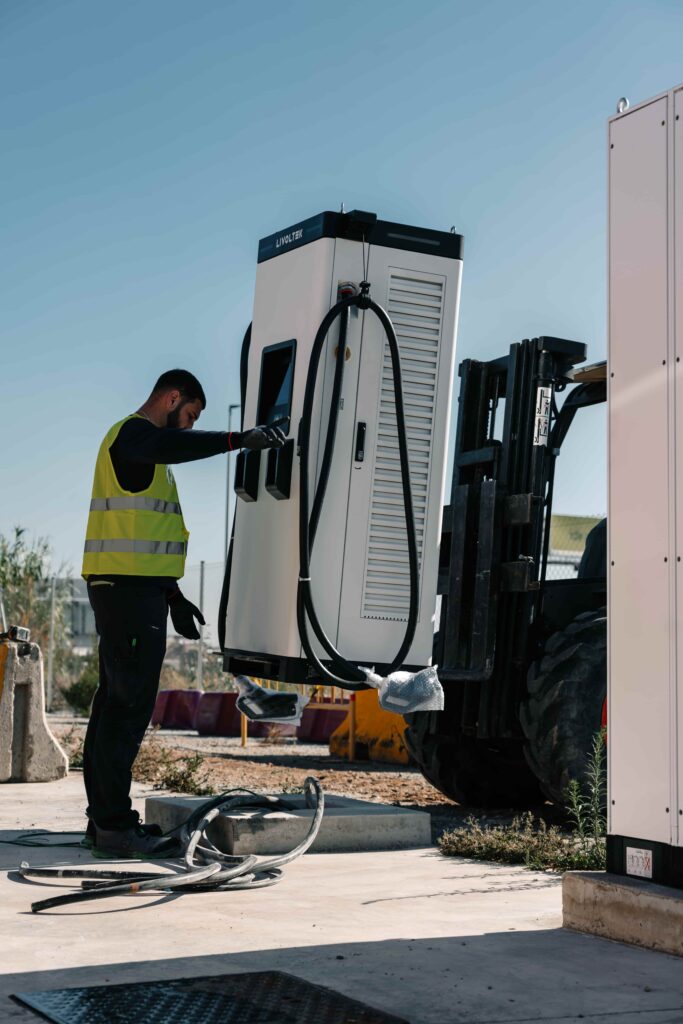
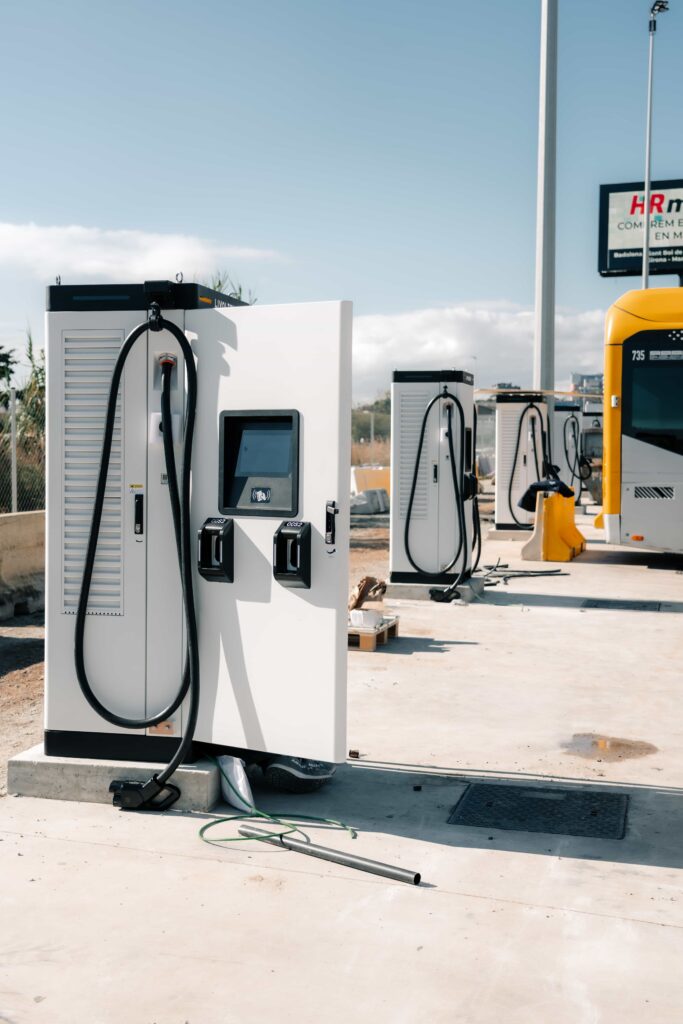
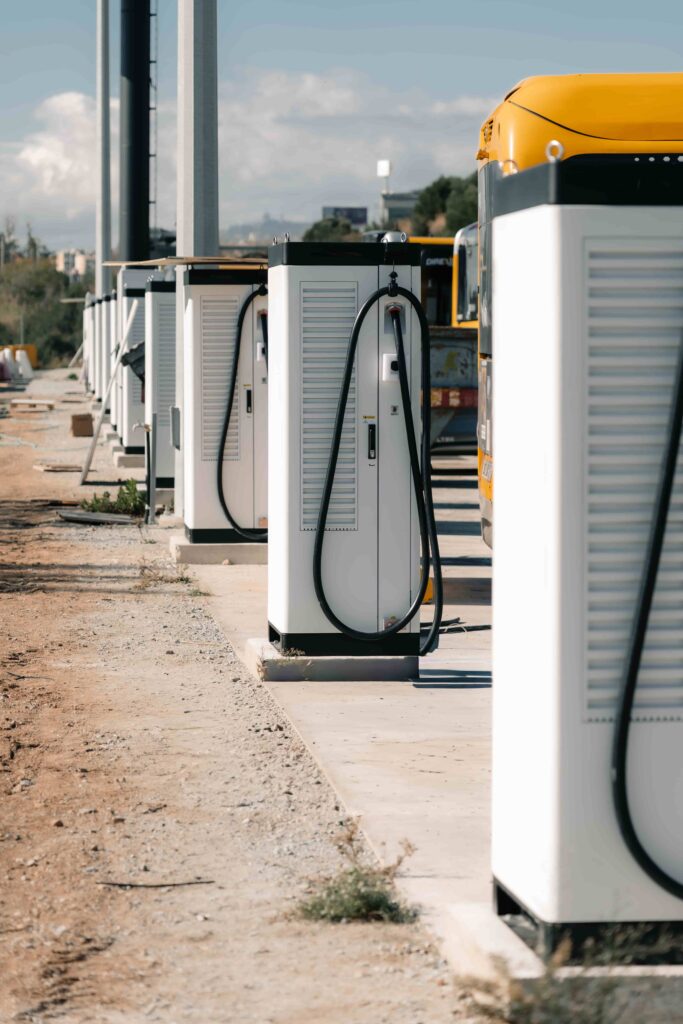
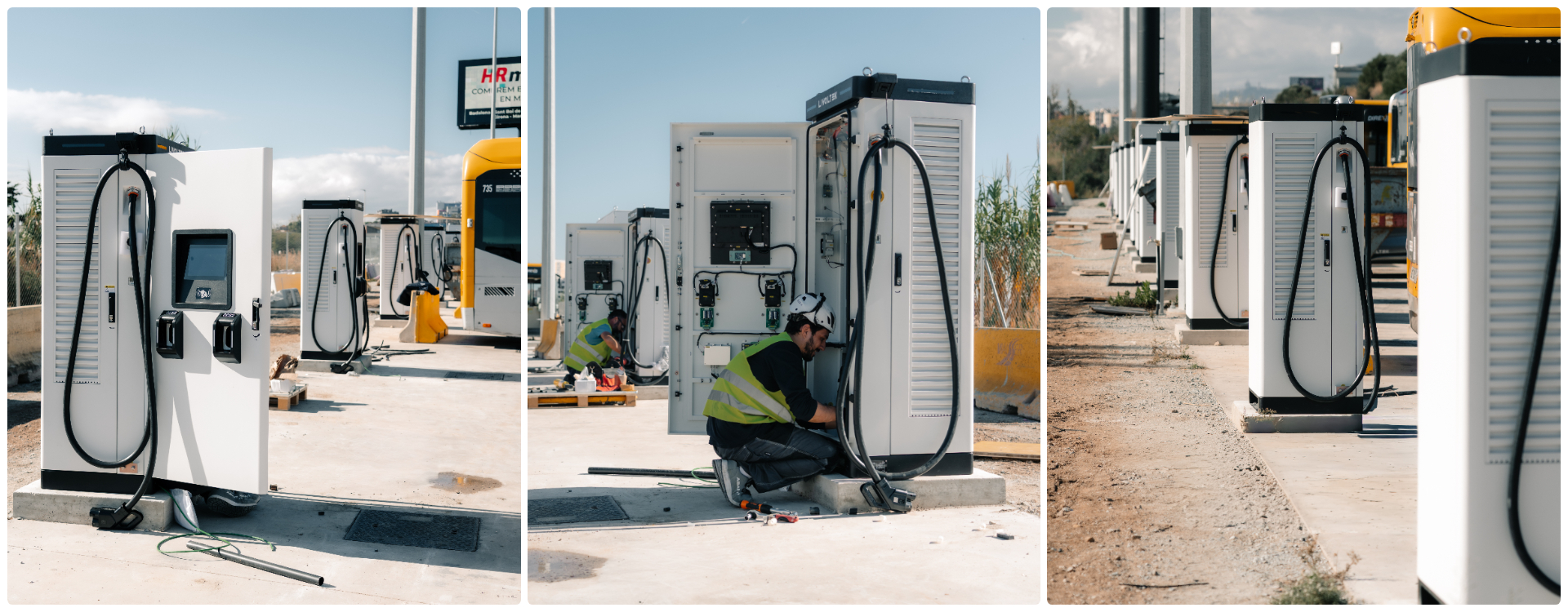
Current Scale: Fifteen dual-port chargers have been installed, supported by a power grid connection capacity of up to 10 MW.
Future Scalability: The core infrastructure is future-proofed to support expansion up to 34–35 dual-connector chargers (approximately 70 charging ports), fully accommodating the ongoing electrification growth of the fleet.
Project Products:
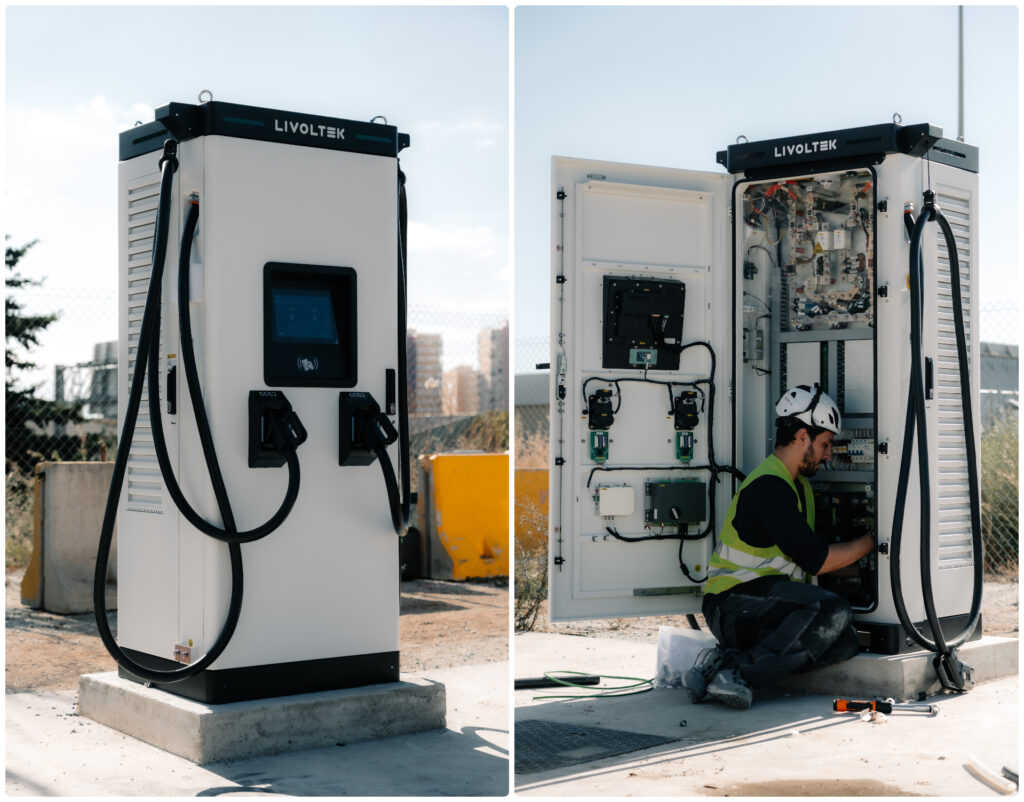
Livoltek MotionFast Series DC Fast Charging Stations
Project Details:
This project represents a comprehensive transformation and upgrade of the project company’s existing bus depot. The core challenge is to convert an active parking lot into a fully electrified operational depot and deploy future-proof charging infrastructure—all without disrupting normal overnight bus parking and operations. Adopting a phased construction approach, the project has successfully achieved “zero operational downtime.” The newly established medium-voltage (MV) grid connection point provides up to 10 MW of power support to accommodate future fleet expansion. To address the management demands of high-value vehicles and large-scale energy transfer, the charging system is equipped with safety and smart features including intelligent scheduling, automated vehicle identification, 24/7 monitoring, smoke detectors, and emergency stop buttons. Tailored to the coastal environment, all equipment features specialized designs for anti-salt spray corrosion and anti-condensation.
Customer Pain Points:
Operational Continuity Challenges: How to comprehensive overhaul infrastructure and deploy charging equipment while ensuring the bus depot can seamlessly park and service hundreds of buses every single night, without disrupting daily operations.
Fleet Scale & Power Planning Challenges: How to design and deploy robust power infrastructure to support intensive overnight charging for the current and future expanding e-bus fleet (targeting 100% sustainability), while ensuring seamless future capacity scalability.
Operational Simplification Demands: How to streamline the e-bus charging process, minimize operator complexity for drivers, and maximize overnight charging efficiency.
Harsh Environmental Adaptation Challenges: Due to the depot’s proximity to the ocean, the dual risks of salt spray corrosion and condensation impose exceptionally high standards on the durability and reliability of the charging hardware.
Safety & Management Demands: The critical need for secure, reliable, and centralized monitoring and management to oversee high-power charging processes, protect high-value assets (buses), and govern large-scale energy transfers.
Project Value:
Driving the Zero-Emission Transition: The project lays a solid physical foundation for the project company to achieve its mid-term goal of a “100% sustainable fleet,” marking a pivotal step forward in the decarbonization strategy for the Barcelona Metropolitan Area’s public transit network.
Securing Operations & Future Scalability: By adopting a “construction during active operations” model and reserving up to 10 MW of power capacity, the project not only guarantees the continuity of current transit services but also ensures “plug-and-play” readiness for large-scale future electrification, thereby safeguarding long-term investments.
Boosting Efficiency & Reliability: The intelligent charging system optimizes power distribution to prevent grid overloading, while the automated vehicle identification feature streamlines operations. Furthermore, the marine-grade hardened design ensures equipment longevity and stable operation under harsh coastal conditions, significantly reducing maintenance costs.
Enhancing Safety & Management Capabilities: Continuous 24/7 monitoring and multi-layered safety safeguards provide a secure environment for large-scale, high-power overnight charging operations, while enabling centralized and visualized energy management.
Social & Environmental Benefits: The project supports the transition of the company’s transit services—which carry over 52 million passengers annually—toward a cleaner alternative. This significantly reduces carbon emissions and noise pollution in urban traffic while elevating both the service quality and public profile of the mass transit network.